
Open-label randomized controlled trial evaluating dialkylcarbamoylchloride (DACC) impregnated dressings for the prevention of surgical site infection in patients undergoing abdominal surgery: the CRISTINA trial protocol
Journal of Chronic Wound Care Management and Research (CWCMR) ISSN: 2324-481X: Published August 1st 2026
*Kylie Sandy-Hodgetts1,2, Associate Professor, BSc (Hons), MBA, PhD; Khurshid Alam3, Professor, PhD; Shareen Van Kempen4, MSc, Clinical Nurse Consultant; Paul Moroz5,6 BSc (Hons), MBBS, PhD, FRACS
Abstract
Background: General and colorectal surgery are effective interventions for the removal and management of cancer and neoplasms. These common surgical procedures are not immune to the occurrence of postoperative complications such as surgical site infection (SSI) or surgical wound dehiscence (SWD). Published rates of SSI following abdominal surgery range from 3% to 60% in some cases, with ensuant morbidity and mortality rates. Complications such as SSI are a major cost driver to healthcare systems, often resulting in extended lengths of stay, readmission for further surgery, primary and community nursing visits, and are a costly burden to healthcare settings. Early identification of wound complications through post-discharge monitoring—using a bacteriostatic dressing, smartphone technology, and patient education - may address contributing factors and reduce the likelihood of complications occurring in the first instance.
Methods: The CRISTINA trial is a phase IV powered pragmatic randomized controlled trial of 386 participants investigating the effectiveness of dialkylcarbamoylchloride (DACC)-containing dressing versus non-DACC dressing (standard of care) in the prevention of SSI in one surgical domain; abdominal surgery. A block randomization method will be used with 193 participants receiving the interventional dressing and 193 participants as control. The dressing will be applied following surgery. Participants will be provided with education prior to discharge on postoperative wound care, and how to use their smartphone to capture and send images of their wound to the study nurses. Participants will also be followed up by home care nursing services on Day 14 for suture/staples removal and wound assessment. Participants will complete a patient-reported outcomes survey on Day 14 and the EQ-5D-5L for quality-of-life assessment. All participants are closed out of the study Day 30.
Discussion: The results of this trial may support the development of a novel clinical pathway combining bacteriostatic dressings and remote digital surgical wound monitoring to prevent acute hospital readmissions due to wound complications, through early detection and rapid intervention.
Keywords: abdominal surgery; colorectal surgery; DACC; early detection; general surgery; prevention; randomized controlled trial; surgical site infection; SSI surveillance; telehealth
General and colorectal surgery are two of the more common surgical procedures performed globally. In Australia, 2022–2023, 20% of admissions for elective procedures were for general surgery. 1,2 Colorectal surgery is a highly effective intervention for treatment of gut and/or bowel conditions, and the removal of lesions and tumors. These procedures include organs such as the colon, rectum, gut or anus and are often used to treat conditions such as Crohn’s disease or bowel cancer. With a growing ageing population diagnosed with multiple comorbidities and an increase in cancer rates, colorectal cancer is the fourth most common cancer diagnosis in Australia.3 According to the Global Burden of Disease Collaborative, surgery for neoplasms/cancer is ranked second at 64% of surgical procedures.4 In the US, surgery for colorectal cancer has increased by 42% in patients between 2002–2014.5 These surgical procedures often affect several different planes; superficial, deep and organ space, are often classed as Class III-IV (contaminated, dirty/infected), procedures that are sometimes are associated with postoperative complications. Complications such as surgical site infections (SSIs) are an unwanted complication following general surgery with incidences ranging from 3–30%6-8. Colorectal surgery has some of the highest occurrences of SSI, with reports ranging from 15–30% in some instances.9,10 Furthermore, SSIs following gastrointestinal procedures involving a midline laparotomy can affect between 25–40% of patients in high-income settings.11,12 These unwanted postoperative outcomes are associated with reduced quality of life (QoL) for the patient, hospital readmissions and increases in healthcare costs for managing the complication.13-17
Various antimicrobial wound dressings containing silver, polyhexamethylene biguanide (PHMB), or iodine have been used in an attempt to reduce the microbial burden of the wound site for the prevention of SSI with varying and often contradictory findings.18,19 A Cochrane systematic review and meta-analysis reported no statistically significant difference of the use of advanced wound dressings for the prevention of SSI.20 The authors further articulated that studies included in the evidence synthesis were poorly or under-powered, imprecise with bias rendering clinically meaningful conclusions uncertain and further rigorous studies warranted.20 Similarly the World Health Organization reported low quality of evidence for the use of advanced dressings over standard dressings, and recommended that further powered studies are required to investigate efficacy for prevention.21 Dialkylcarbamoyl chloride (DACC) is a relatively recent addition to this category of advanced dressings. DACC is a fatty acid derivative which is highly hydrophobic and irreversibly binds multiple types of bacteria, capturing them in the dressing and reducing the number of organisms at the wound surface.22–25 This results in the mechanical rather than chemical removal of bacteria from the wound surface and reduces further contamination of the wound site.26,27 Moreover, this reduces the potential for the occurrence of antimicrobial resistance of pathogens.27,28 Pathogens commonly associated with SSIs or chronic wounds irreversibly bind to DACC coatings due to their hydrophobic extracellular surface.29 Early detection of wound complications and the implementation of prevention strategies may ameliorate contributing factors or reduce the likelihood of a complication occurring in the first instance.
SURGICAL WOUND COMPLICATIONS FOLLOWING GENERAL AND COLORECTAL SURGERY
To address the evidence gap for the use of DACC-containing dressings for the prevention of SSI following a general or colorectal procedure (in the abdominal plane), a randomized controlled trial is proposed. This study will use an advanced DACC-containing wound dressing coupled with the ability to capture digital images of the incisional wound via smartphone technology (remote digital surgical wound monitoring – RDSWM)30. Providing wound care education prior to discharge, and ongoing support in the home care setting, enables patients to send digital images of their wound to a clinician for remote monitoring of surgical wound healing
progress. This approach facilitates early detection of surgical wound complications and improves health care delivery. Patient-to-provider smartphone technology enables clinicians to remotely assess surgical wounds via digital images, with or without the need for dressing removal, outpatient clinic attendance, or presentation to a primary healthcare setting. Unless otherwise indicated, the patient’s wound can be remotely monitored to full closure. Furthermore, use of this self-care model empowers the patient in their wound healing. More importantly, this will facilitate the early detection of a wound complication and allow the clinician to intervene during this critical timepoint. It is early detection that may lead to prevention of a serious wound event that is key to improving surgical wound healing.
MATERIALS AND METHODS
This study will determine the feasibility of such a model in the early detection and prevention of surgical wound complications (SWC), and whether rapid treatment may reduce hospital readmissions due to serious wound breakdown. In this study, quantitative and qualitative methods will be applied to investigate the patient’s perception of wound healing after surgery–a shortfall in the current research–using a fit-for-purpose Bluebelle Wound Healing Questionnaire (WHQ). Finally, we aim to determine the cost-effectiveness of the intervention relative to the control undertaking a cost-utility analysis reporting a cost per quality-adjusted life year (QALY) using the EuroQol EQ-5D-5L.
OBJECTIVES AND ENDPOINTS
The study aims to investigate the efficacy of an advanced wound dressing containing Dialkylcarbamoyl Chloride (DACC) (Leukomed® Sorbact®; BSN Medical, UK) compared to standard of care (SOC) (non-DACC dressing) for the prevention of a SWC in patients undergoing abdominal surgery. Further to this, the study will investigate the feasibility of a novel clinical pathway for the early identification and prevention of postoperative SWC using remote digital surgical wound monitoring (RDSWM). The study aims to reduce not only the number of SWCs using DACC-containing dressings and patient education, but also to reduce the number of hospital readmissions due to undiagnosed and untreated wound complications after abdominal surgery.
The study objectives are;
1. To investigate the effectiveness of DACC-containing advanced wound dressing compared to non-DACC dressings in the prevention of SSI and surgical wound dehiscence (SWD).
2. To determine the utility of remote digital surgical wound monitoring (RDSWM), using digital images captured via smartphone technology by the patient and sent to the healthcare provider (HCP).
3. To determine the clinical feasibility of a novel clinical pathway for postoperative prevention and management of SWC.
4. To determine the cost-effectiveness of the intervention dressing relative to the SOC via a cost utility analysis.
5. Conduct a patient survey to capture perceptions of wound healing following abdominal surgery.
TRIAL DESIGN
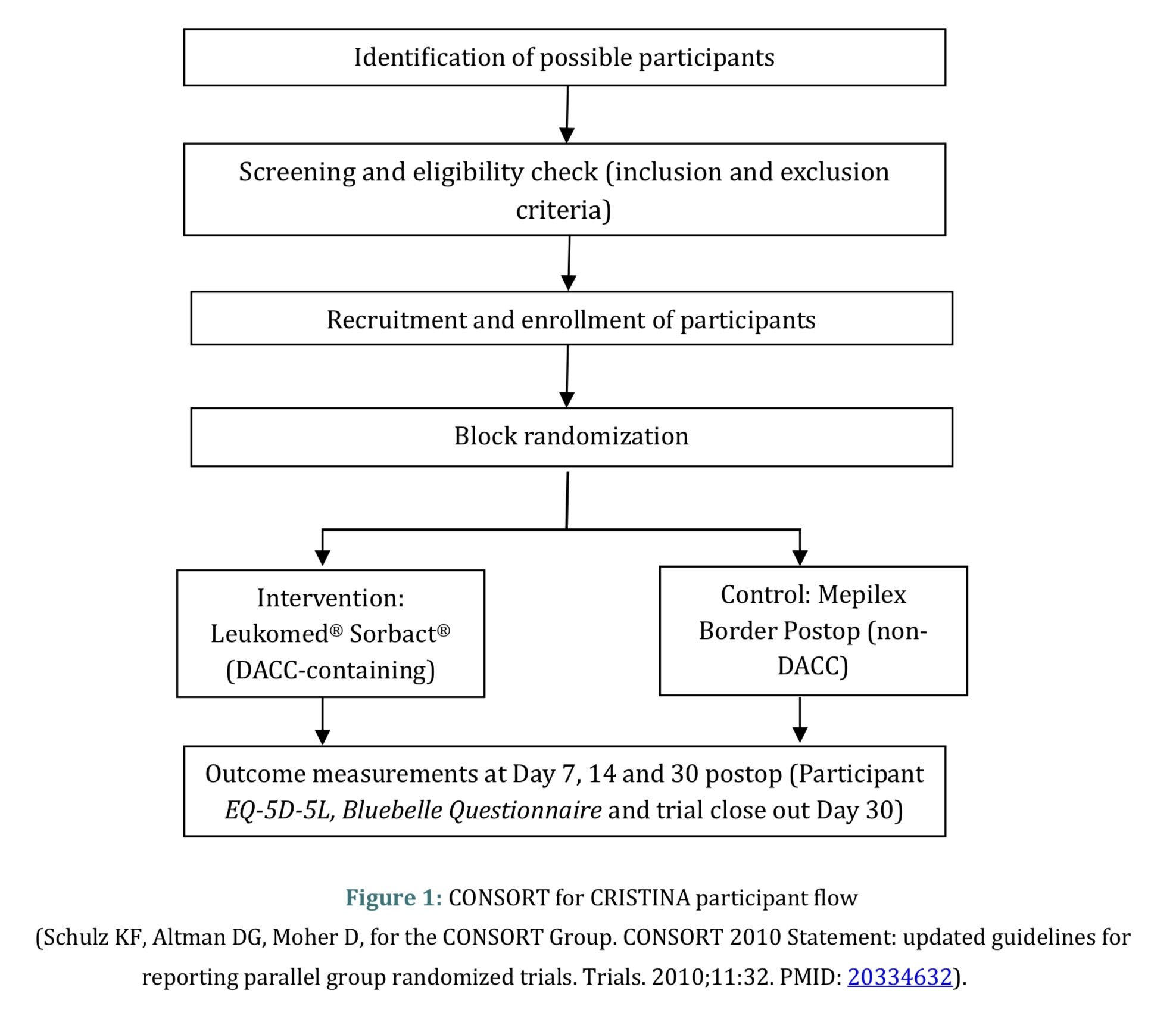
This study is a powered, block randomized, superiority trial of 386 participants. The conduct of the trial is shown below in the trial CONSORT.
STUDY SETTING
Participants will be sourced from patients attending a metropolitan private hospital for elective general or colorectal surgery in Australia. English-speaking patients who are to undergo an elective general or colorectal procedure will be invited to participate in the study. Potential participants will be invited to participate during the initial surgical consult with the colorectal surgeon/trial coordinator, written informed consent will be sought prior to enrollment.
ELIGIBILITY CRITERIA
The eligibility criteria are as follows; Inclusion criteria: Consenting adults scheduled to undergo elective general or colorectal surgery; Exclusion criteria: Non-consenting patients, urgent or emergency admissions.
CHOICE OF COMPARATORS
This study will investigate the role of an advanced bacteriostatic dressing (Leukomed® Sorbact®) which traps and prevents bacterial activity at the wound and periwound skin interface. The SOC dressing currently used in clinical practice is an advanced wound care dressing (hydrocolloid; Mepilex Border Postop (Mölnlycke, UK) indicated for use in acute and chronic wound care. As the DACC-impregnated pad absorbs exudate and supports optimal wound healing through partial hydration, this dressing is suitable for dry and low exuding wounds. The dressing’s adhesive border ensures secure fixation. The high permeability of the film dressing to water vapour and oxygen helps to prevent build-up of fluid and maceration. The dressing protects the wound from friction and shear and provides a barrier to bacteria, viruses, and external contaminants. The dressing is indicated for dry and low exuding acute wounds such as surgical wounds, superficial partial-thickness burns, skin donor sites, lacerations and abrasions.
INTERVENTION AND COMPARATOR
The dressing will be placed over the participant’s wound site following closure of the wound in the operating theatre. SOC wound protocol remains in place for all participants; the dressing remains intact for 7 days unless clinically indicated otherwise. Prior to discharge, all participants will receive education (verbal and written provided by the study research assistant/clinical nurse consultant) on their wound, dressing care and how to manage this in the home. Control participants will receive the standard care dressing which is a hydrocolloid (Mepilex) (non-bacteriostatic) dressing. All study participants will receive an information sheet on warning signs of potential wound complication, how to take and send a digital image of the wound at home, and next steps if required. The dressing wear time for all participants during the study period is 7 days. Both study arms receive identical education and remote monitoring access, therefore the primary comparison isolates DACC-containing versus non-DACC dressing.
Participants are only required to take an image of their wound if they have any of the following symptoms: bleeding, pus, fever, pain. This may occur up to 30 days following the procedure. If the participant needs to send an image of their wound for assessment, the image will be sent to the Wound CNC hospital phone and uploaded into a purpose-built password encrypted hospital-based communication application; Clinivid™ (https://clinivid.com.au/). The image will be stored within the participant’s hospital medical record. Only hospital study personnel will be able to access this information. All participants will be followed up during the following post-discharge timepoints: Week 1, Day 14 and Day 30, if not contacted earlier by the participant.
REMOTE MONITORING ADHERENCE METRICS
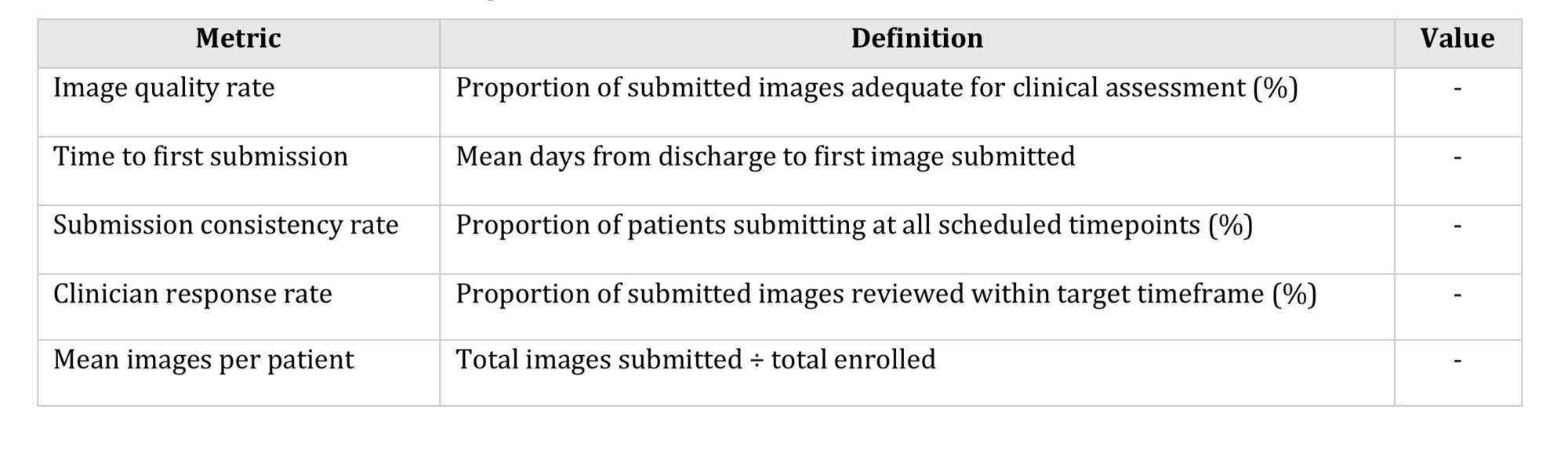
Three metric components will be used to determine remote monitoring feasibility, clinician response time and wound dressing wear time.
Metric 1: Proportion Submitting Images
The following formulae will be used to determine the proportion of the study population who have submitted images:
Proportion (%) = (Number of patients who submitted ≥1 image ÷ Total enrolled in remote monitoring) × 100.
Table 1. Image submission metrics
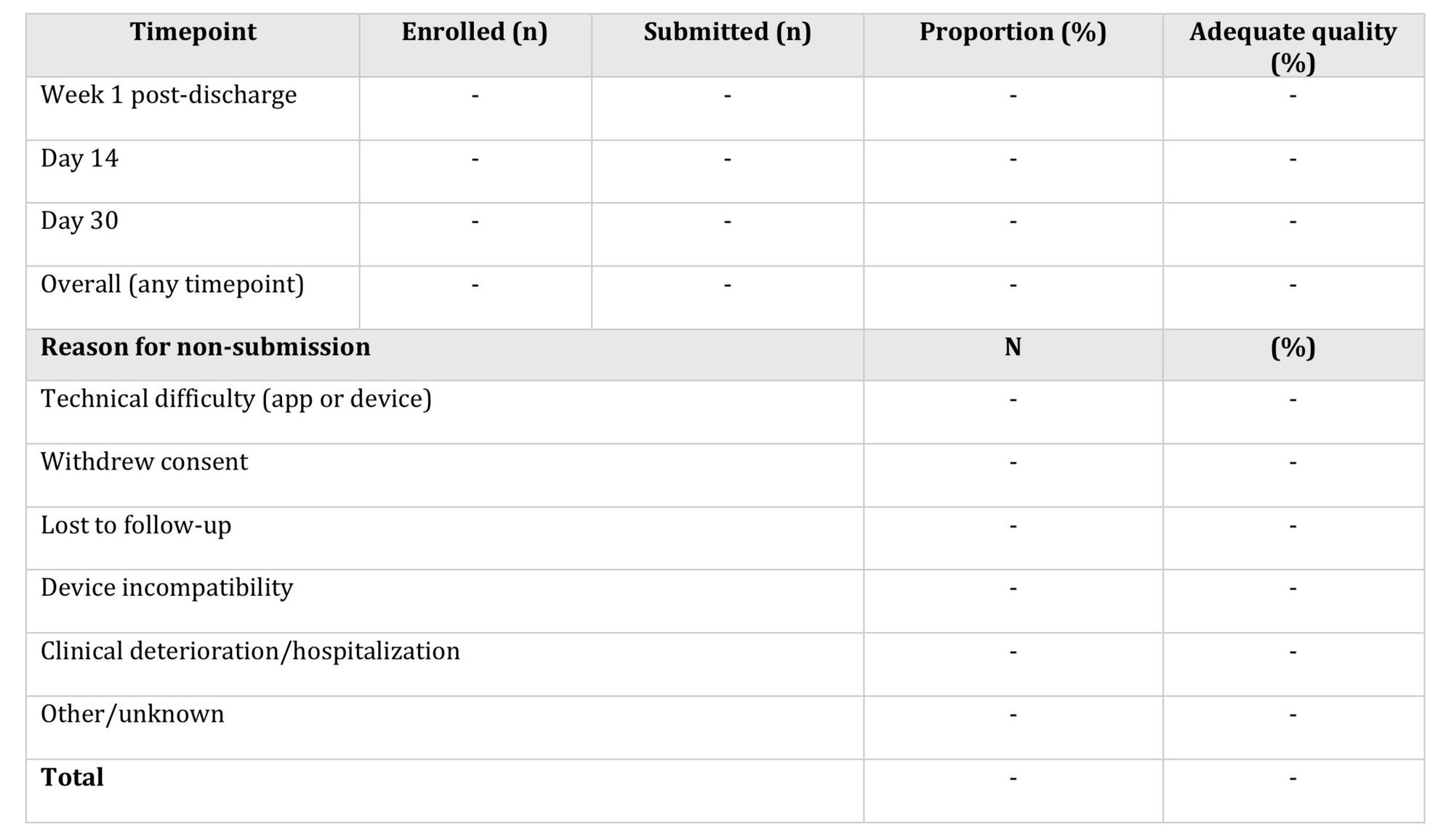
The following metrics will be used to determine remote monitoring adherence.
Table 2. Monitoring adherence metrics
Metric 2: Time to clinician response
A response is defined as any documented acknowledgement, clinical recommendation, or request for further information recorded by the treating clinician within the Clinivid communication platform. Metrics for response time are as follows:
1. Median time to first clinician response following image submission, with IQR
2. Proportion of submissions receiving a clinician response within pre-specified benchmarks: ≤4 hours, >4 to ≤24 hours, and >24 hours31
3. Proportion of submissions receiving no clinician response within 72 hours, classified as a response failure and subject to protocol-specified escalation.
Metric 3: Dressing wear time compliance
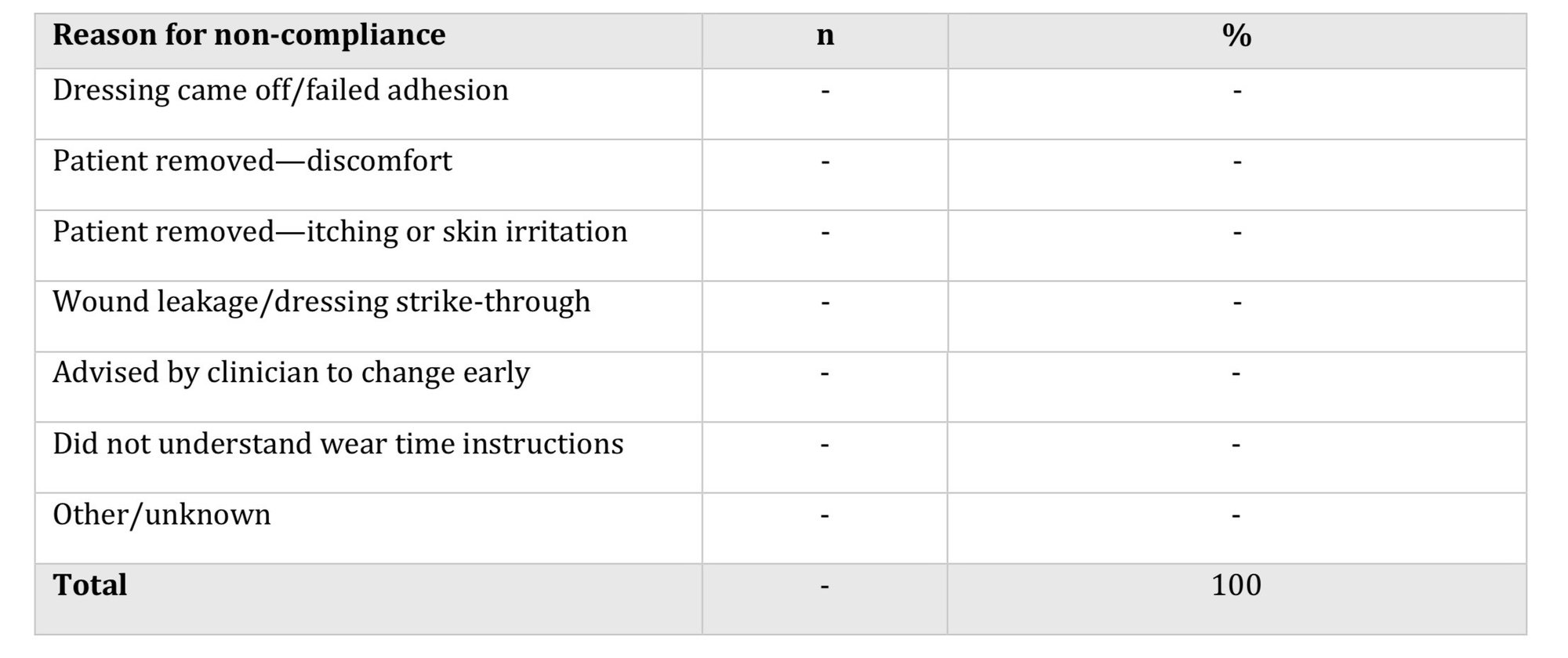
The proportion of enrolled patients who wore their wound dressing for the prescribed duration at each monitoring timepoint, as reported or verified during the remote monitoring period. Dressing wear time is a critical determinant of wound healing outcomes. Premature removal disrupts the wound healing environment, increases infection risk, and compromises the integrity of the monitoring pathway.
Non-compliance with prescribed wear time may also confound wound image assessment — if a dressing has been removed and reapplied, the clinical picture is altered. The following formula will be used to determine dressing wear time compliance:
Compliance (%) = (Patients wearing dressing for prescribed duration ÷ Total enrolled) × 100
Measures are listed below to determine dressing wear time adherence (Table 3).
Table 3. Dressing wear adherence metrics
The standardized timepoints Day 7, 14 and 30 following surgery will be used, unless otherwise indicated such as dressing change required due to clinical flags (Table 4).
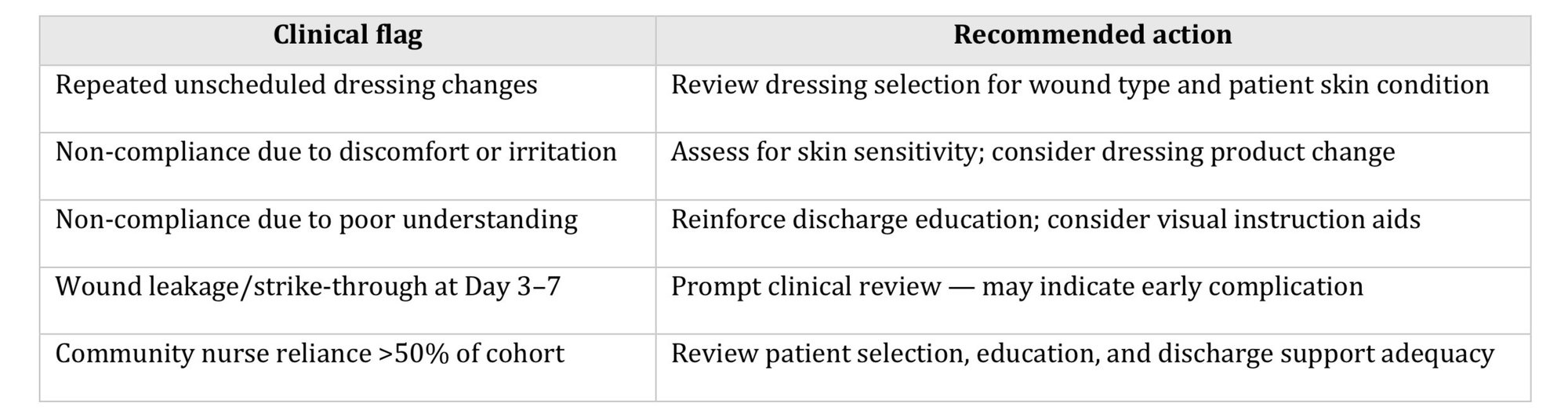
On completion of the EuroQol EQ-5D-5L and the Bluebell Wound Healing Questionnaire, all participants will be closed out of the trial as close as reasonably possible following 30 days after surgery. All study participants will be provided with post-discharge education on wound care and will be able to access remote monitoring for care of their wound whenever they need advice.
CRITERIA FOR DISCONTINUING OR MODIFYING ALLOCATED INTERVENTIONS
Criteria for discontinuing the intervention are: (1) clinically observed and patient reported allergy or reaction to the dressing; (2) participant withdrawal from the study. The protocol does not allow for modification of the intervention.
STRATEGIES TO IMPROVE ADHERENCE TO INTERVENTIONS
The participants will be closely monitored as part of the discharge surveillance programme at the study site. Postoperative week 1 participants will be contacted by the study research nurse via a phone call to follow up on their wound healing. A scripted phone call will ask questions of the participant in relation to their wound healing and dressing using the validated Bluebelle Wound Experience Questionnaire within the first 2 weeks after discharge. The hospital post-discharge surveillance programme and wound care protocol will be adhered to.
RELEVANT CONCOMITANT CARE PERMITTED OR PROHIBITED DURING THE TRIAL
During the trial normal wound care assessment and management is permitted. There are no changes to any concomitant care provided by a HCP.
Outcomes
PRIMARY OUTCOMES
The primary composite outcome is defined as the occurrence of SSI and/or SWD within 30 days of surgery. SSI will be defined using Centers for Disease Control (CDC) criteria (superficial, deep, or organ/space). SWD will be defined and graded using the WUWHS Sandy Grading System (grades 1–5). Each participant will be classified as a composite event (yes/no). Participants who experience both SSI and SWD will be counted as a single composite event and not double-counted. In secondary analyses, each component will be reported individually—including the proportion experiencing SSI alone, SWD alone, and concurrent SSI and SWD—to enable characterization of the overlap between outcomes. The temporal sequence of co-occurring events will be recorded and reported descriptively.
Table 5. Composite outcome reporting scenarios
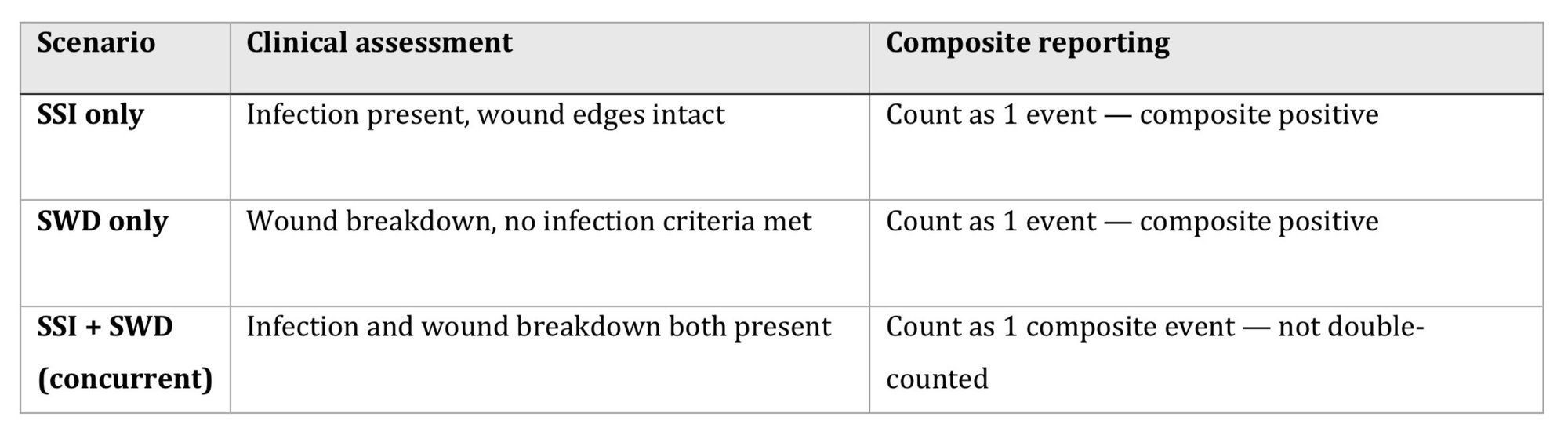
SCENARIO COMPOSITE REPORTING
1. SSI as per the CDC reporting definition32 is defined as the occurrence of a wound infection where the surgery took place and occurs within 30 days of the procedure. This study will use Day 30 as the primary outcome measure timepoint. The infection is categorised as either superficial, deep or organ space.
The criteria for SSI are as follows:
Purulent drainage, with or without laboratory confirmation, from the superficial incision.
Organisms isolated from an aseptically obtained culture of fluid or tissue from the superficial incision.
At least one of the following signs or symptoms of infection: pain or tenderness, localized swelling, redness, or heat and superficial incision is deliberately opened by surgeon, unless incision is culture-negative.
Diagnosis of superficial incisional SSI by the surgeon or attending physician.
2. SWD (Yes/No) will be classified using the Sandy/WUWHS SWD Grading System.33 A SWD is a breakdown of the wound site and is associated with a disruption to the normal healing process but does not involve contamination or infection. A breakdown can occur from trauma, broken sutures, loss of clips holding the incision together. Assessment will be conducted by a study nurse.
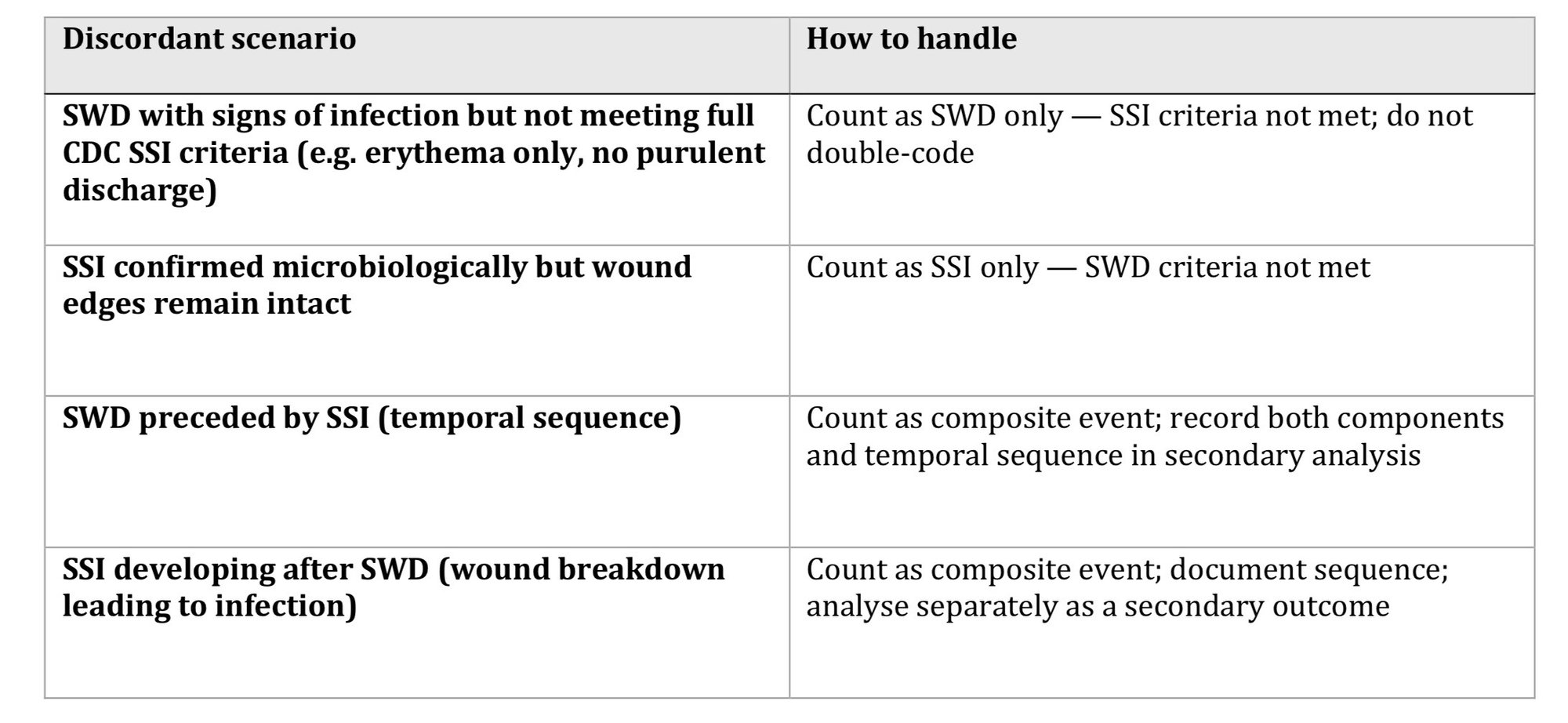
DISCORDANCE
Discordance refers to situations where the two conditions are clinically related, but do not both meet formal diagnostic criteria simultaneously. Common discordant scenarios in surgical wound research include:
Table 6. Discordance reporting
SECONDARY CHARACTERIZATION OF OUTCOME:
1. The Southampton Wound Score (SWS)34 system will also be used. The SWS is a measure of the severity of a wound complication after surgery. Assessment is conducted by a study nurse.
SECONDARY OUTCOMES
Secondary outcomes are designed to capture the participants’ perception of their wound healing journey and to obtain QoL indicators. Tools used include the patient-reported wound healing outcomes (PROMs); Bluebelle Wound Healing Questionnaire and the EuroQoL EQ-5D-5L Survey.
Study instruments for secondary outcomes
EUROQOL EQ-5D-5L
The EuroQol EQ-5D-5L is a validated measure of health-related QoL, comprising a five-dimension health status classification system and a separate Visual Analogue Scale35. The EQ-5D-5L consists of five dimensions (Mobility, Self-Care, Usual Activities, Pain/Discomfort, and Anxiety/Depression), with each dimension having 5 levels. We will use the five-level version of the instrument, which is likely to be more sensitive to small but important changes in health-related QoL. The responses will be converted into an index score, and total QALYs for each participant will be obtained by estimating the area under the curve defined by their baseline and final EQ-5D-5L responses. This measure of QALY will be the outcome measure for cost-utility analysis.
BLUEBELLE WOUND HEALING QUESTIONNAIRE
A specific fit-for-purpose validated wound experience questionnaire will be used to evaluate the participants’ experience in relation to their wound healing following surgery. The Bluebelle Wound Healing Questionnaire is an 18-item questionnaire for the assessment of SSI in closed primary wounds.36 It is a single measure designed for completion by patients, or HCPs during a period of up to 30 days after discharge from hospital. The questionnaire includes items to assess signs, symptoms and wound care interventions indicative of SSI. Response categories include an ordinal scale to capture symptom severity. Development of the measure involved patients and professionals using robust methodology. This survey tool has been used extensively in the UK to describe the patients experience with wound healing in the post-discharge period.37 Permission was sought and granted by the authors of the Bluebelle Group to use the wound experience questionnaire for the CRISTINA study.
PARTICIPANT TIMELINE
Table 7. Schedule of events–CRISTINA Trial
|
Study Assessments |
Screening |
Study Period |
||||
|
Visits |
Baseline |
DOS |
Discharge |
Day 7 |
Day 14 |
Day 30 |
|
Day Post-op |
|
0 |
3±1 days |
7±2 days |
14±2 days |
30±2 days |
|
Informed consent |
X |
|
|
|
|
|
|
Inclusion/exclusion criteria |
X |
|
|
|
|
|
|
Demographic data |
X |
|
|
|
|
|
|
Medical history |
X |
|
|
|
|
|
|
Prior medication history |
X |
|
|
|
|
|
|
Height |
X |
|
|
|
|
|
|
Weight |
X |
|
X |
|
|
|
|
Investigational product application |
|
X |
|
|
|
|
|
Education on dressing – discharge |
|
|
X |
|
|
|
|
Participant photos of incision site 1 |
|
|
|
X |
X |
|
|
Adverse event reporting |
|
|
X |
X |
X |
|
|
Assessment for surgical site infection as per CDC2 definition |
|
|
|
X |
X |
X |
|
Wound Healing Assessment Southampton Wound Score3 |
|
|
|
X |
X |
X |
|
Surgical Wound Dehiscence Grading4 |
|
|
|
X |
X |
X |
|
Bluebelle Patient Survey5,6 |
|
|
|
|
X |
|
|
EuroQol EQ-5D-5L |
|
|
|
|
|
X |
|
End of Study (Window open until 30 days post-surgery) |
|
|
|
|
|
|
|
|
|
|
|
|
|
|
1 Informed consent will be obtained prior to any study procedures being performed. Photographs of the dressing application site will be taken prior to discharge. In the event of a local skin reaction, additional photos of the area may be taken by the participant and sent to attending physician/clinical CNC to evaluate or verify findings
2 CDC Surgical site infection definition https://www.cdc.gov/infectioncontrol/guidelines/ssi/index.html
3 The Southampton Wound Score will be used to assess wound infection and severity. Wilson A et al (2004) Surgical wound infection as a performance indicator: agreement of common definitions of wound infection in 4773 patients. BMJ (https://pubmed.ncbi.nlm.nih.gov/15367425/)
4 In the event a surgical wound dehiscence occurs, a grading of the dehiscence will be scored as per the WUWHS SWD Grading System https://www.woundsinternational.com/resources/details/consensus-document-surgical-wound-dehiscence-improving-prevention-and-outcomes.
5 Bluebelle Wound Experience Questionnaire (Validation of the Bluebelle Wound Healing Questionnaire for assessment of surgical-site infection in closed primary wounds after hospital discharge Br J Surg 2019 Feb;106(3):226-235. doi: 10.1002/bjs.11008.
6 The participant will be required to complete the patient survey EQ-5D-5L either electronically or via mail. (https://euroqol.org/eq-5d-instruments/)
DOS–Day of service
SAMPLE SIZE
This study is using a powered sample size for a superiority trial, based upon a published Australian SSI rate of 15% in the control arm and a hypothesized absolute reduction to 7.5% in the intervention arm— representing a 50% relative risk reduction—a sample of 164 participants per arm is required to achieve 80% power at α = 0.05. Inflating for an anticipated 15% dropout rate yields a total enrollment target of 386 participants.
RECRUITMENT
Potential participants will be screened for eligibility by the lead surgeon and Coordinating Principal Investigator (CPI)/Research assistant (RA) during the initial surgical consult. Following identification of eligible participants, the potential participant will be informed of the study and invited to participate. All participants are included in the analysis.
Assignment of interventions: allocation
SEQUENCE GENERATION
This study will use a block sequence method. A computer-generated sequence will be generated using REDCap (Version 15.5.3, 2026) which will only be accessible to the study coordinator. The sequence will be extracted and stored separately. Enrolling staff will not be able to access the sequence.
TYPE OF RANDOMIZATION
Following enrollment into the study, baseline data will be collected, and eligible participants will be randomized via the computer-generated sequence on the day of surgery to either an intervention or control arm.
CONCEALMENT MECHANISM
The allocation sequence will be stored on a password-encrypted hard drive which only the study coordinator will have access to. They will assign participants to their group on the day of surgery and relay this information to the relevant study personnel. This method ensures the allocation of participants to either the intervention or control group does not influence participant recruitment, will minimize selection bias and ensure the surgeon and nurse are independent of the allocation.
IMPLEMENTATION
The research nurse will enroll consented participants, and the study coordinator will allocate to either the intervention or control arm of the study. This will be conducted on the day of the procedure.
Assignment of interventions: Blinding
WHO WILL BE BLINDED
The statistician will be blinded to group allocation during analysis; participants and care providers will not be blinded due to the nature of the dressings being different in appearance.
PROCEDURE FOR UNBLINDING IF NEEDED
The design is open-label and unable to be blinded.
Data collection and management
PLANS FOR ASSESSMENT AND COLLECTION OF OUTCOMES
Outcomes will be determined by both the study nurse and surgeon and will include microbiological assessment where indicated.
The following schedule for assessing and reporting outcomes will be used:
Day 7 Assessment Schedule: all participants are followed up via phone call.
Day 14 Assessment Schedule: all participants are followed up by home care services for the removal of sutures/staples and full wound assessment, chart review, clinician assessment, and standardised questions). All participants to complete Bluebelle Wound Questionnaire in clinic.
Day 30 Assessment Schedule: all participants are contacted via phone call for follow up using standardised questions. All participants will be emailed a link to complete the EuroQol EQ-5D-5L questionnaire.
Case report forms (CRFs), will be in the electronic format (REDCap Software) and participant-related characteristics (age, weight, BMI, smoking, non-smoker, previous abdominal surgery, immunosuppressed, anticoagulation therapy, ASA Class) as well as pre-existing comorbidities (diabetes, peripheral arterial disease, cardiovascular disease) and intraoperative-related factors (closure method, sutures/glue) will be recorded in the electronic CRFs. The CRFs will also record the wound characteristics: wound healed (Yes/No); dehiscence, if so, extent and depth as per the WUWHS SWD Grading System, SSI (Yes/No) and type as per CDC definition, scarring (type keloid, non-keloid) and the Southampton Wound Score on of the incisional wound. The trigger for the use of these assessment tools will be patient-reported sign and symptoms during the follow-up timepoints for participants. This information will be recorded by study personnel at the specified follow-up timepoints. Source data will be de-identified, aggregated and entered into a statistical software programme (SPSS V30, IBM) for further analysis.
PLANS TO PROMOTE PARTICIPANT RETENTION AND COMPLETE FOLLOW-UP
Postoperative weeks 1–6 participants will be contacted by the study CPI/RA via a phone call to follow-up on their wound healing. A scripted phone call will ask questions of the participant in relation to their wound healing and dressing. Retention is to the last follow-up timepoint and close out, Day 30.
DATA MANAGEMENT
Primary data will be collected electronically via purpose-built REDCap Software database. Data will be de-identified, aggregated and transposed into a software programme (SPSS V30 IBM) for further analysis. Source data will be stored in a locked filing cabinet in a locked office at the hospital site. The electronic database is protected via two-factor authentication, encrypted and firewall protected via Murdoch University Cybersecurity platforms. Access to the REDCap project will be restricted to named study personnel and assigned on a role-specific basis by the Project Administrator. Access rights will be commensurate with each team member's study role and will follow the principle of minimum necessary access. New users will be granted access only following completion of REDCap training and Good Clinical Practice (GCP) certification where required. Access will be revoked immediately upon departure from the study team. User accounts and access levels will be reviewed at six-monthly intervals or following any change in study personnel. REDCap's built-in audit trail functionality will be enabled for the duration of the study. All data entry, modification, deletion, and export events will be automatically logged with a timestamp, user identifier, and details of the change made. Audit logs will be reviewed by the Data Manager at monthly intervals and by the coordinating principal investigator at each study milestone. Any unexplained modifications or access anomalies will be escalated to the Human Research Ethics Committee (HREC) as a protocol deviation. Audit logs will be retained for a minimum of 15 years following study completion in accordance with the Australian Code for the Responsible Conduct of Research.
Following database closure, the REDCap project will be locked to prevent further data entry or modification. The locked dataset will be exported in CSV format, verified against the audit log, and stored in the Murdoch University Repository. The REDCap project will be archived and access restricted to the Coordinating Investigator only. Electronic data will undergo interim validation checks (random sample) by an independent observer to ensure accuracy and identify any errors which will be cross-checked with source documentation for entry errors. This will be conducted monthly for the duration of the data collection phase.
Statistical methods
STATISTICAL METHODS FOR PRIMARY AND SECONDARY OUTCOMES
Baseline descriptive statistics of the sample will be conducted. Statistical methods to be used will be descriptive statistics and tests for significance between groups, nominal and categorical data (Chi-squared and Fisher’s exact test). For cost-utility analysis, incremental cost-effectiveness ratio (ICER) will be estimated. Moreover, to examine the distribution of ICER, 95% confidence intervals (95% CIs) will be estimated using bootstrap simulations. All these analyses will be undertaken using SPSS V30.38
DEFINITION OF WHO WILL BE INCLUDED IN EACH ANALYSIS
The primary analysis will follow the intention-to-treat principle, including all participants in the groups to which they were allocated. This will be irrespective of whether there is loss to follow-up and intervention completion. A per protocol analysis of participants will be conducted as a secondary analysis including only participants who completed the trial.
INTERIM ANALYSIS
One interim analysis is planned as per monitoring requirements. This study will use the Haybittle-Peto boundary as the trial stopping rule.39,40 Data Safety Monitoring Board (DSMB) will receive blinded data (aggregated form only).
METHODS FOR ADDITIONAL ANALYSES
Subgroup analysis will be conducted to determine associations and correlations within and between discrete variables. Descriptive statistics and correlation coefficients (Pearson’s r) will inform the use of logistic regression analysis to determine independent risk predictors related to primary (SSI) and secondary (SWD) outcomes.
METHODS IN ANALYSIS TO HANDLE PROTOCOL NON-ADHERENCE AND ANY STATISTICAL METHODS TO HANDLE MISSING DATA
Any missing data will be recorded in the source documentation as ‘missing’ and in the electronic record coded as 999. Statistical methods to handle missing data include pre-specified sensitivity analyses, complete case analysis, best/worst case scenario analysis, and tipping point analysis to determine the magnitude of bias required to overturn primary findings. Missing data will be reported per CONSORT guidelines, including volume and pattern by variable and timepoint. Anticipated sources include non-submission of wound images, dropout due to wound complication, and incomplete patient-reported outcome measures (Bluebelle, EQ-5D-5L).
PLANS TO GIVE ACCESS TO THE FULL PROTOCOL, PARTICIPANT LEVEL-DATA AND STATISTICAL CODE
The full protocol including the statistical plan is being submitted for publication and will be publicly accessible on publication. The same information is available on the Australian and New Zealand Clinical Trials Registry (ANZCTR). Any substantive changes from the published protocol will be documented with a rationale provided in subsequent publications.
Oversight and monitoring
COMPOSITION OF THE COORDINATING CENTER AND TRIAL STEERING COMMITTEE
This is a single center study, performed and coordinated by Murdoch University and Ramsay Health Care Joondalup Campus. Daily trial support is provided by the following;
CPI: supervision of trial, related regulatory and ethical compliance.
Site Principal Investigator and study physician: supervision of trial at site and medical governance of participants, identifies potential recruits, ensures follow up according to protocol.
Trial coordinator: informed consent, study visits, data capture, safeguard quality and data. Study wound care (acute setting) senior nurse, remote or physical consultation and wound assessment. Study wound care (home services) nurses; remote or physical consultation, wound assessment, data capture, ensures follow-up according to protocol.
The study team meets weekly or as required.
COMPOSITION OF THE DATA MONITORING COMMITTEE, ITS ROLE AND REPORTING STRUCTURE
The DSMB will advocate for the ethical and safety interests of the participants while the trial progresses by making nonbinding recommendations to the Trial Committee. A DSMB will be formed to monitor the study at interim periods: first third participants closed out (n=128) and last quarter closed out.
The DSMB consists of three independent reviewers: a statistician, surgeon and a nurse. The DSMB will be bound by the DSMB Terms of Reference and will provide a written report to the Trial Committee. The Trial Committee consists of the CPI, Site principal investigator (PI), research nurse and a biostatistician.
ADVERSE EVENT REPORTING AND HARMS
The trial will adhere to the Therapeutic Goods Administration’s (TGA) definitions of adverse events for the duration of the trial. The trial will follow the processes as outlined in the NHMRC (2016) Safety monitoring and reporting in clinical trials involving therapeutic goods, which is accessible via: https://www.nhmrc.gov.au/sites/default/files/2023-03/NHMRC-guidance-safety-monitoring-and-reporting.pdf. The procedures for eliciting reports of and for recording and reporting adverse events will be followed, including definitions of adverse events. For further information on adverse events, refer to the TGA “The Australian Clinical Trial Handbook” 2018 and the NHMRC "Safety monitoring and reporting in clinical trials involving therapeutic goods" 2016. Whilst adverse events are not anticipated during this study, all standard site operating and reporting procedures will be adhered to in the event an adverse event occurs during the trial.
FREQUENCY AND PLANS FOR AUDITING TRIAL CONDUCT
The trial team will meet fortnightly to ensure the study is being conducted in accordance with the study protocol. All trial investigators will permit (following formal written request) trial related monitoring, audits and regulatory inspections including local and external review, Human Research Ethics Committee and institutional governance review bodies as requested.
ETHICAL APPROVAL AND INFORMED CONSENT
This study received full ethics approval from Ramsay Health Care Human Research Ethics Committee, Approval ID 2024/ETH/0079. Written informed consent will be obtained from all participants. Written informed consent will be sought from all participants by the clinical trial coordinator and/or PI after informing the patient of the study and invitation to participate.
PROTOCOL AMENDMENTS
Any major protocol amendments that may occur including changes to the study design, interventions, outcomes, eligibility will be submitted for approval to the Institutional Ethics Committee prior to implementation. Prior to submission, proposed changes will be discussed during clinical trial group meeting
with investigators. Any changes made will be updated on trial registries and documented as required by reporting requirements. Any changes will also be communicated to the participants in the event the amendment(s) impact treatment and requires investigators to obtain an updated informed consent. Any protocol deviations will be documented and reported using a protocol deviation form.
CONFIDENTIALITY
Risk of disclosure of personal information is minimal as the investigators will adhere to Section 95A Australian Privacy Act, data is recorded in aggregate form only. Source documentation will be kept separate to the study database. Data collected will be de-identified and coded accordingly. To manage the risk of disclosure of personal information, data collected will be de-identified, source documentation will be stored in a locked filing cabinet in a locked office onsite. Only the study PI, CPI and study statistician are permitted access to the data as data custodians of the study.
PROVISIONS FOR POST-TRIAL CARE
No harm is anticipated from participation in this study; compensation is not planned. Following completion of trial participation, patients will continue to receive the standard of care, if required, and provided by their HCP.
DISSEMINATION PLANS
The trial has been registered with the trial registration identifier: ANZCTRN12622001492741p. All publications and dissemination of trial findings will adhere to the International Committee of Medical Journal Editors Recommendations for the Conduct, Reporting, Editing and Publication of Scholarly Work in Medical Journals. Study findings will be reported at academic and scientific congresses and meetings.
Discussion
The CRISTINA trial is a two-arm randomized controlled trial designed to investigate the effectiveness of bacteriostatic wound dressings compared to SOC in patients undergoing abdominal surgery. To the best of our knowledge, this is the first powered study to investigate a DACC-containing dressing for the prevention of postoperative wound complications in abdominal wounds in the post-discharge setting. Moreover, the use of smartphone technology to allow communication between the patient and provider may lead to reduced admissions to the acute care setting.
EXPECTED STRENGTHS AND LIMITATIONS
Among the strengths of this study are the powered randomized controlled study design that incorporates block sequence and well-structured intervention and control measures. The use of multiple validation tools to measure outcomes will ensure accurate and appropriate measurement and recording of any events relevant to the investigation. The study inclusion criteria are designed to increase homogeneity and hence improve signal detection with any findings to be relevant to a real-world setting. Assessments across three timepoints including follow-up in the post-operative period and out to 30 days after surgery will increase participant retention, reduce loss to follow-up and ensure complete data collection and patient reported experiences are documented.
Despite these strengths, several limitations must be acknowledged. The sample will be restricted to the use of a single center general surgery population in a tertiary hospital setting in Perth, subsequently this may limit applicability to other settings and populations. As with trials investigating wound care dressings, neither the participants nor study staff are blinded to the intervention. While retention strategies are in place, another study limitation is with the potential of sample dropout which may lead to sample bias.
The exclusion of patients unable to provide informed consent in English represents a limitation of this study and restricts the generalizability of findings to English-speaking surgical populations. In Australia, where a significant proportion of the surgical population identifies as culturally and linguistically diverse (CALD), this exclusion may introduce selection bias and limit the applicability of the risk assessment and remote monitoring pathway to CALD communities. Future phases of this research program will prioritize translation of the monitoring platform and patient education resources to enable inclusion of non-English-speaking patients, with particular attention to communities with elevated surgical wound complication risk.
We believe this randomized controlled trial is well-positioned to evaluate the effectiveness of a bacteriostatic dressing compared to standard care for the prevention of SSI. This study will also contribute to the growing evidence base regarding patients' lived experience of wound healing after surgery and the role of remote digital surgical wound monitoring in informing patient-centered wound care.
TRIAL STATUS
The anticipated commencement of recruitment of participants for this trial is July 2026. Recruitment is anticipated to be completed within a 12-month timeframe. Participants will be followed to post-operative Day 30. It is anticipated that all participants are to be closed out of the study by August 2027. It is anticipated that data analysis will be completed by October 2027. The authors confirm that all trial related information and interventions used in this study are registered.
Author Contributions: KSH is the Chief Investigator; she conceived the study, was the lead trial methodologist, and led the proposal and protocol development. SVK, KA and PM contributed to protocol development. KA is providing health economics expertise and modelling cost-effectiveness.
Received: 19 March 2026 | Accepted: 9 July 2026
Funding: Murdoch University is the institution responsible for the trial. This research is being supported by an unrestricted educational grant. Essity BSN Hamburg has not contributed to the study design, data collection or analysis, interpretation of findings, or manuscript writing.
Institutional Review Board Statement: This trial was prospectively registered ANZCTRN12622001492741p. Date submitted to ANZCTR: 28/01/2022, date approved: 29/11/2022 (ANZCTR - Registration).
Informed Consent Statement: Clinical images will be used only for clinical assessment, endpoint ascertainment, and research data verification. No identifiable participant images will be published unless separate written consent for publication is obtained.
Data Availability Statement: Data generated during the trial may be made available from the corresponding author upon reasonable request.
Data sharing statement: De-identified individual participant data (IPD) generated during the trial will not be shared publicly. Access to anonymized data may be considered upon reasonable request to the corresponding author.
Acknowledgments: The authors wish to thank the patients in advance for their time and willingness to participate in this study. The authors would also like to thank the general and colorectal surgical team and nursing staff who provide patient care prior to and following their surgery.
Conflicts of Interest: KSH has received speaker honorariums from Essity BSN Hamburg, Mölnlycke Healthcare, Gothenburg and Coloplast Australia. All other authors declare no conflicts of interest.
Disclaimer/Publisher’s Note: The statements, opinions and data contained in all publications are solely those of the individual author(s) and contributor(s) and not of CWRM and/or the editor(s). CWRM and/or the editor(s) disclaim responsibility for any injury to people or property resulting from any ideas, methods, instructions or products referred to in the content.
REFERENCES
1. AIHW. AIHW National Elective Surgery Wait Times Data Collection (Australian Institute of Health and Welfare 2024). https://meteor.aihw.gov.au/content/775622
2. Fingar KR, Stocks C, Weiss AJ, Steiner CA. in Healthcare Cost and Utilization Project (HCUP) Statistical Briefs (Agency for Healthcare Research and Quality (US), 2006).
3. AIHW. Cancer Data in Australia 2023. (Canberra, 2023). https://www.aihw.gov.au/reports/cancer/cancer-data-in-australia/contents/summary
4. GBD. Global Burden of Disease Study 2010 (GBD 2010) Results by Cause 1990–2010. (Institute for Health Metrics and Evaluation (IHME), 2012, Seattle, United States of America, 2012). https://ghdx.healthdata.org/record/ihme-data/gbd-2010-results-cause-1990-2010
5. Rubin DS et al. U.S. trends in elective and emergent major abdominal surgical procedures from 2002 to 2014 in older adults. J Am Geriatr Soc 69, 2220–2230 (2021). https://doi.org/10.1111/jgs.17189
6. Tang R et al. Risk factors for surgical site infection after elective resection of the colon and rectum: a single-center prospective study of 2,809 consecutive patients. Ann Surg 234, 181–189 (2001). https://doi.org/10.1097/00000658-200108000-00007
7. Coppa GF, Eng K, Gouge TH, Ranson JH, Localio SA. Parenteral and oral antibiotics in elective colon and rectal surgery. A prospective, randomized trial. Am J Surg 145, 62–65 (1983). https://doi.org/10.1016/0002-9610(83)90167-8
8. Smith RL. et al. Wound infection after elective colorectal resection. Ann Surg 239, 599–605; (2004). https://doi.org/10.1097/01.sla.0000124292.21605.99
9. Tanner J. et al. Post-discharge surveillance to identify colorectal surgical site infection rates and related costs. The Journal of Hospital Infection 72, 243–250 (2009). https://doi.org/10.1016/j.jhin.2009.03.021
10. Hübner M. et al. Surgical site infections in colon surgery: the patient, the procedure, the hospital, and the surgeon. Arch Surg 146, 1240–1245 (2011). https://doi.org/10.1001/archsurg.2011.176
11. Pinkney TD. et al. Impact of wound edge protection devices on surgical site infection after laparotomy: multicentre randomised controlled trial (ROSSINI Trial). BMJ 347, f4305 (2013). https://doi.org/10.1136/bmj.f4305
12. Smyth ETM. et al. Four Country Healthcare Associated Infection Prevalence Survey 2006: overview of the results. Journal of Hospital Infection 69, 230–248 (2008). https://doi.org/10.1016/j.jhin.2008.04.020
13. Bilgiç Ç. et al. Surgical site infections after pancreaticoduodenectomy: Preoperative biliary system interventions and antimicrobial prophylaxis. Int J Infect Dis 95, 148–152 (2020). https://doi.org/10.1016/j.ijid.2020.04.005
14. Badia JM. et al. Impact of surgical site infection on healthcare costs and patient outcomes: a systematic review in six European countries. J Hosp Infect 96, 1–15 (2017). https://doi.org/10.1016/j.jhin.2017.03.004
15. Monahan M. et al. Surgical site infection and costs in low- and middle-income countries: A systematic review of the economic burden. PloS one 15, e0232960 (2020). https://doi.org/10.1371/journal.pone.0232960
16. Sandy-Hodgetts KST, Nair HK, Assadian O. et al. Barriers and enablers for clinical management of surgical wound complications: results of an international survey prior and during the COVID-19 pandemic. Wounds Int 13, 1–7 (2022). https://woundsinternational.com/journal-articles/barriers-and-enablers-clinical-management-surgical-wound-complications-results-international-survey-prior-during-covid-19-pandemic/
17. Turner MC, Migaly J. Surgical Site Infection: The Clinical and Economic Impact. Clin Colon Rectal Surg 32, 157–165 (2019). https://doi.org/10.1055/s-0038-1677002
18. Li HZ, Zhang L, Chen JX, Zheng Y, Zhu XN. Silver-containing dressing for surgical site infection in clean and clean-contaminated operations: a systematic review and meta-analysis of randomized controlled trials. J Surg Res 215, 98–107 (2017). https://doi.org/10.1016/j.jss.2017.03.040
19. Sandy-Hodgetts K. et al. International Surgical Wound Complications Advisory Panel - guidelines for postoperative incision care. J Wound Care 34, S1–S19 (2025). https://doi.org/10.12968/jowc.2025.34.Sup1a.S1
20. Dumville JC. et al. Dressings for the prevention of surgical site infection. Cochrane Database of Systematic Reviews 12, Cd003091 (2016). https://doi.org/10.1002/14651858.CD003091.pub4
21. Global Guidelines for the Prevention of Surgical Site Infection. World Health Organization (2018). https://www.who.int/publications/i/item/9789241550475
22. Totty JP. et al. Dialkylcarbamoyl chloride (DACC)-coated dressings in the management and prevention of wound infection: a systematic review. J Wound Care 26, 107–114 (2017). https://doi.org/10.12968/jowc.2017.26.3.107
23. Bua N. et al. Dialkylcarbamoyl chloride dressings in the prevention of surgical site infections after nonimplant vascular surgery. Ann Vasc Surg 44, 387–392 (2017). https://doi.org/10.1016/j.avsg.2017.03.198
24. Ljungh A, Yanagisawa N, Wadström T. Using the principle of hydrophobic interaction to bind and remove wound bacteria. J Wound Care 15, 175–180 (2006). https://doi.org/10.12968/jowc.2006.15.4.26901
25. Romain B. et al. Dialkylcarbamoyl chloride-coated versus alginate dressings after pilonidal sinus excision: a randomized clinical trial (SORKYSA study). BJS Open 4, 225–231 (2020). https://doi.org/10.1002/bjs5.50259
26. Falk P, Ivarsson ML. Effect of a DACC dressing on the growth properties and proliferation rate of cultured fibroblasts. J Wound Care 21, 327–328, 330–322 (2012). https://doi.org/10.12968/jowc.2012.21.7.327
27. Morgner B, Husmark J, Arvidsson A, Wiegand C. Effect of a DACC-coated dressing on keratinocytes and fibroblasts in wound healing using an in vitro scratch model. J Mater Sci Mater Med 33, 22 (2022). https://doi.org/10.1007/s10856-022-06648-5
28. Husmark J, Morgner B, Susilo YB, Wiegand C. Antimicrobial effects of bacterial binding to a dialkylcarbamoyl chloride-coated wound dressing: an in vitro study. J Wound Care 31, 560–570 (2022). https://doi.org/10.12968/jowc.2022.31.7.560
29. Ljungh A, Wadström T. Growth conditions influence expression of cell surface hydrophobicity of staphylococci and other wound infection pathogens. Microbiol Immunol 39, 753–757 (1995). https://doi.org/10.1111/j.1348-0421.1995.tb03267.x
30. Rochon M et al. Remote digital surgical wound monitoring and surveillance using smartphones. J Wound Care 34, S1–S25 (2025). https://doi.org/10.12968/jowc.2025.34.Sup4b.S1
31. Caffery LJ. et al. Practice Guidelines for Teledermatology in Australia: 2025 Update. Australas. J. Dermatol 66, e553–e564 (2025). https://doi.org/10.1111/ajd.14599
32. Mangram AJ, Horan TC, Pearson ML, Silver LC, Jarvis WR. Guideline for Prevention of Surgical Site Infection, 1999. Centers for Disease Control and Prevention (CDC) Hospital Infection Control Practices Advisory Committee. Am J Infect. Control 27, 97–132; quiz 133-134; discussion 196 (1999). https://pubmed.ncbi.nlm.nih.gov/10196487/
33. Sandy-Hodgetts K, Ousey K, Dowsett C. et al. World Union of Wound Healing Societies Consensus document: Surgical wound dehiscence, improving prevention and outcomes. (London, 2018). https://woundsinternational.com/world-union-resources/consensus-document-surgical-wound-dehiscence-improving-prevention-and-outcomes/
34. Wilson AP. et al. Surgical wound infection as a performance indicator: agreement of common definitions of wound infection in 4773 patients. BMJ 329, 720 (2004). https://doi.org/10.1136/bmj.38232.646227.DE
35. Stolk E, Ludwig K, Rand K, van Hout B, Ramos-Goñi JM. Overview, update, and lessons learned from the international EQ-5D-5L Valuation Work: Version 2 of the EQ-5D-5L Valuation Protocol. Value Health 22, 23–30 (2019). https://doi.org/10.1016/j.jval.2018.05.010
36. Bluebelle Study Group. Validation of the Bluebelle Wound Healing Questionnaire for assessment of surgical-site infection in closed primary wounds after hospital discharge. Br J Surg 106, 226–235 (2019). https://doi.org/10.1002/bjs.11008
37. Glasbey J. Adaptation of the Wound Healing Questionnaire universal-reporter outcome measure for use in global surgery trials (TALON-1 study): mixed-methods study and Rasch analysis. Br J Surg 110, 685–700 (2023). https://doi.org/10.1093/bjs/znad058
38. Briggs AH, Wonderling DE, Mooney CZ. Pulling cost-effectiveness analysis up by its bootstraps: a non-parametric approach to confidence interval estimation. Health Econ 6, 327–340 (1997). https://doi.org/10.1002/(SICI)1099-1050(199707)6:4<327::AID-HEC282>3.0.CO;2-W
39. Haybittle JL. Repeated assessment of results in clinical trials of cancer treatment. Br J Radiol. 44, 793–797 (1971). https://doi.org/10.1259/0007-1285-44-526-793
40. Peto R. et al. Design and analysis of randomized clinical trials requiring prolonged observation of each patient. I. Introduction and design. Br J Cancer 34, 585–612 (1976). https://doi.org/10.1038/bjc.1976.220